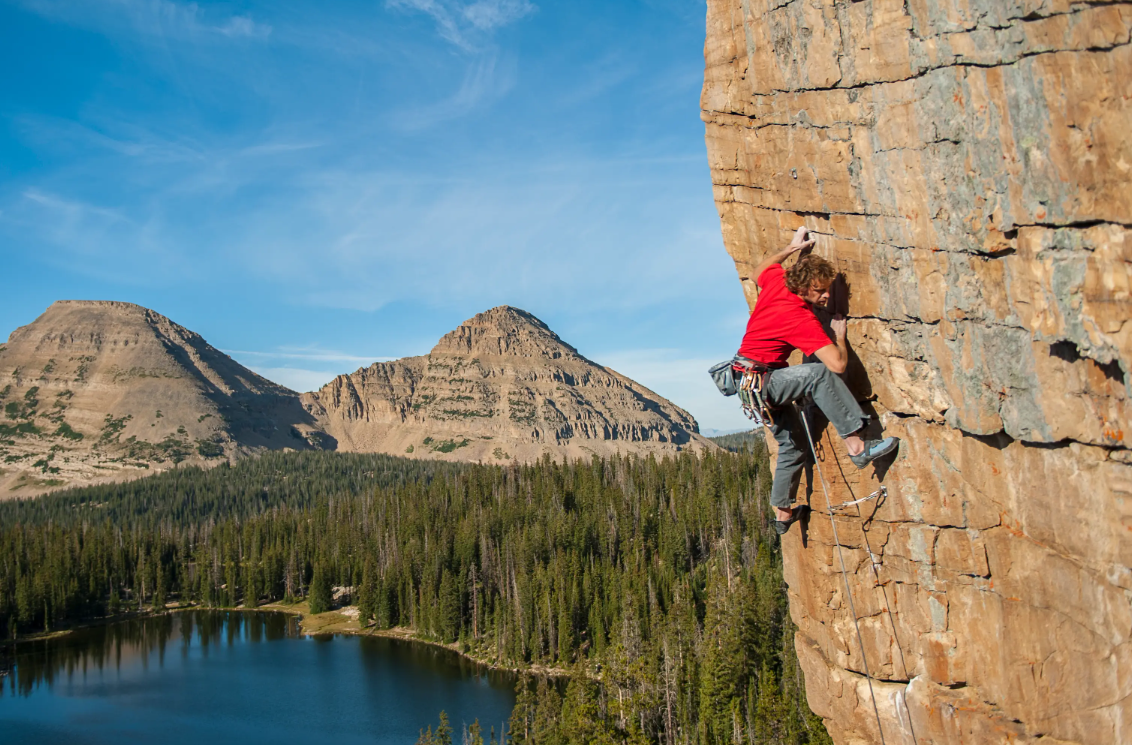
Reaching the top of an easy indoor climbing route may take little more than strong arms and a few well-placed footholds. That approach stops working once the holds get smaller or the wall becomes steeper. Pulling harder only gets you so far, especially when your feet aren’t doing their share of the work.Rock climbing depends on balance, precise movement, and knowing when to conserve energy. A slight change in foot placement or hip position can turn an awkward move into a manageable one. Learning these habits early helps beginners climb efficiently instead of relying on upper-body strength.
There are several ways to get started. Indoor gyms provide established routes, rental equipment, and space to practice in a controlled setting. Outdoor climbing adds natural rock, changing conditions, and decisions about protection and route selection. Both are accessible to newcomers with suitable instruction and safety procedures.
Your First Steps Into Rock Climbing
Rock climbing for beginners doesn’t require exceptional fitness or previous outdoor experience. Most commercial gyms offer introductory routes, rental shoes, and lessons. The first decision is choosing a discipline that suits your interests and comfort level.
Bouldering involves short climbs without ropes, with padded landing areas indoors. Top-rope climbing uses a rope running through an anchor above the climber, managed by a belayer below. Lead climbing introduces additional risks because the climber clips the rope into protection points while ascending.
An introductory lesson is useful even when the easiest routes seem straightforward. Instructors explain gym procedures, demonstrate basic movement, and teach appropriate falling or lowering techniques. They can also identify inefficient habits before those become difficult to correct.
Indoor Walls or Outdoor Rock?
Indoor rock climbing takes place on artificial walls fitted with holds of different shapes and sizes. Routes are marked by color or tags, and staff maintain the climbing environment. Climbers remain responsible for following facility rules and checking their equipment.
Outdoor rock climbing involves more variables. Loose rock, wet surfaces, changing weather, and unfamiliar routes can affect difficulty and safety. Climbers must also consider access restrictions, anchor conditions, and the approach to the climbing area.
| Feature | Indoor climbing | Outdoor climbing |
|---|---|---|
| Surface | Artificial walls and holds | Natural rock formations |
| Route identification | Colored holds or marked problems | Guidebooks, descriptions, and rock features |
| Equipment | Often available to rent | Usually requires personal or group equipment |
| Conditions | Generally controlled | Affected by weather and rock conditions |
| Main beginner challenge | Learning movement and gym procedures | Assessing terrain, hazards, and protection |
Starting indoors allows newcomers to concentrate on movement before dealing with outdoor hazards. A guided outdoor session can be equally suitable. The deciding factor is access to appropriate instruction, equipment, and safety systems.
Indoor Climbing
Most climbing gyms have bouldering areas, top-rope walls, and sometimes lead climbing sections.
Bouldering problems consist of short sequences of moves. Thick mats help absorb falls, although awkward landings can still cause injuries. Beginners should use designated downclimb holds and follow the gym’s falling instructions rather than attempting to stop a fall with outstretched arms.
Top-rope climbing allows longer ascents. With the rope passing through an overhead anchor, a correctly operated belay system generally limits fall distance. The belayer must remain attentive and maintain proper control throughout the climb.
Before attempting harder routes, become familiar with the gym’s grading system and rules for sharing the wall. Watching experienced climbers can reveal footholds and movement sequences that aren’t obvious from the ground.
Outdoor Climbing
Outside, climbers make decisions that indoor route setters usually handle for gym users. Finding the intended line, checking rock quality, and understanding the protection system all become part of the activity.
Outdoor disciplines require different skills and equipment. Sport climbing on natural rock generally relies on fixed bolts, while traditional climbing uses removable protection placed in cracks and other features. Outdoor bouldering requires portable crash pads and, where appropriate, spotters who help direct falls toward the landing area.
Indoor top-rope experience doesn’t automatically prepare someone to lead outdoors, build anchors, or evaluate fixed hardware. These skills require separate instruction and supervised practice.
Access rules deserve attention as well. Some climbing areas close seasonally to protect nesting birds or other wildlife. Others restrict chalk use or require visitors to stay on established trails to limit erosion.
Understanding Climbing Routes and Grades
A climbing route follows a sequence of holds or natural features toward a defined finish. In bouldering, these sequences are usually called problems.
Climbing grades indicate approximate technical and physical difficulty. They don’t directly measure danger, and grading systems differ between disciplines and countries.
In the United States, roped free climbs commonly use the Yosemite Decimal System (YDS), while bouldering problems are often rated on the V scale.
| System | Typical use | Beginner reference |
|---|---|---|
| Yosemite Decimal System | Roped free climbing | 5.5–5.8 on many introductory routes |
| V scale | Bouldering | VB, V0, and V1 |
| French sport grades | Roped climbing internationally | Lower grades such as 4a, 4b, and 5a |
| Font scale | Bouldering internationally | Lower grades such as 3, 4, and 5 |
These numbers are guides rather than guarantees. A 5.7 slab might challenge someone who struggles with balance, while a steeper route of similar difficulty could feel easier to a climber with stronger pulling ability.
Indoor grades also vary between gyms. Wall angle, hold texture, route setting, and the distance between moves all influence perceived difficulty. Grades help climbers choose suitable challenges, but understanding the movement matters more than reaching a particular number.
Techniques That Make Climbing More Efficient
Beginners tend to focus on their hands. Climbing holds are easy to see, and gripping them feels like the obvious way to stay on the wall. Yet efficient movement depends heavily on footwork, balance, and the position of the body between holds.
Good rock climbing techniques reduce unnecessary muscular effort and make difficult sequences more manageable. Two fundamental skills are precise foot placement and choosing the right grip for each hold.
Footwork and Body Position
Precise foot placement is among the most valuable skills a new climber can develop.
Using the front of a climbing shoe improves accuracy on small footholds. Deliberate placement also prevents unnecessary adjustments that waste energy or cause the shoe to slip.
Three habits make a noticeable difference:
-
Watch your feet. Identify the foothold and look at your shoe until it makes contact rather than stepping blindly.
-
Push with your legs. Use your lower body to gain height instead of pulling upward with bent arms on every move.
-
Adjust your hips. On vertical terrain, bringing your hips closer to the wall can reduce strain on your arms. Turning sideways may improve reach and stability on steeper sections.
Wall angle changes how these techniques work. On slabs, where the surface leans back from vertical, balance, friction, and weight distribution become particularly important. Overhangs demand greater body tension to keep the feet engaged and prevent uncontrolled swinging.
Try climbing an easy route without making noise when placing your feet. Quiet steps encourage precision and reveal how often you reposition a shoe unnecessarily.
Grip and Movement
Gripping every hold as hard as possible quickly exhausts the forearms. Different hold shapes require different hand positions and levels of pressure.
Slopers are rounded holds that depend heavily on friction and body position. Edges require precise finger placement, while pockets accommodate one or more fingers depending on their size.
An open-hand grip keeps the fingers less curled than a full crimp. The two positions distribute forces differently across the fingers, joints, and supporting tissues. Neither is universally safer, particularly when loading small holds or climbing while fatigued.
Reading a route before starting can save considerable effort. Look for footholds, possible resting positions, and the direction of difficult moves. This process, known as route reading, helps climbers avoid inefficient positions.
Keeping the arms relatively straight when possible reduces sustained effort from the biceps. Some moves require bent arms or a burst of momentum, but maintaining a tense position longer than necessary drains energy.
Climbing with control doesn’t mean moving slowly. A dynamic move may be more efficient than reaching from a static position. The aim is to match the movement to the holds, wall angle, and available footholds.
Strength, Mobility and Endurance for Climbers
Climbing requires a combination of strength, coordination, and muscular endurance. Someone who performs well in a conventional gym may still struggle on moderate routes because their grip endurance and movement skills haven’t developed.
For beginners, regular practice with sufficient recovery usually offers more benefit than an elaborate rock climbing training program.
One or two sessions per week provide a practical starting point for many newcomers. Some can manage three, depending on intensity, session length, and previous experience. Training frequency should increase gradually rather than follow a fixed schedule.
General exercises can support climbing strength. Rows and pull-up progressions develop upper-body capacity, while squats and core work improve stability. These exercises complement time on the wall rather than replace it.
Mobility becomes important when placing a foot high, rotating the hips, or reaching from an awkward position. Improving hip movement, ankle range of motion, and shoulder mobility can make these positions easier to control.
Climbing endurance develops through repeated movement at manageable intensity. Easy traverses, longer routes, and short sequences of comfortable climbs help build the ability to continue without losing technique.
Beginners generally don’t need dedicated hangboard training. High-intensity finger loading can exceed the capacity of tissues that haven’t adapted to climbing demands. Persistent finger or elbow pain warrants stopping the aggravating activity and seeking appropriate assessment.
Essential Rock Climbing Gear
The climbing equipment you need depends on the discipline. Indoor bouldering usually requires climbing shoes and, if permitted, chalk. Roped climbing involves a harness, rope system, belay equipment, and a trained partner.
Not every item sold as climbing equipment suits every discipline. Compatibility and correct use matter as much as the equipment itself.
| Equipment | Main purpose | Typical use |
|---|---|---|
| Climbing shoes | Improve precision and contact on footholds | Most climbing disciplines |
| Chalk and chalk bag | Manage hand moisture | Indoor and outdoor climbing where permitted |
| Harness | Connect the climber to a rope system | Roped climbing |
| Dynamic climbing rope | Stretch under load to help reduce peak forces during falls | Lead and many top-rope systems |
| Belay device | Control rope movement during belaying | Roped climbing |
| Climbing helmet | Protect against certain head impacts | Especially important outdoors |
| Crash pad | Provide a portable landing surface | Outdoor bouldering |
Climbing shoes should fit securely without sharp pain or numbness. Beginners rarely benefit from extremely tight, aggressively downturned models. A relatively neutral shoe is usually more comfortable for learning basic footwork.
Harnesses must fit correctly and be used according to the manufacturer’s instructions. Belay devices differ in operation. Assisted-braking models provide additional braking assistance but still require proper technique and continuous control of the brake strand.
A dynamic rope stretches under load, helping reduce peak forces during a fall. Its performance depends on the wider system, including the belay method, rope path, and amount of rope in use. Ropes, carabiners, and other protective equipment must be compatible, meet applicable standards, and be inspected regularly.
Rental gear is often sufficient for an initial indoor session. Technical rope equipment is best selected after practical instruction, when you understand what your chosen discipline requires.
From Beginner Routes to More Difficult Climbs
Steady progress comes from developing movement skills before repeatedly attempting climbs at the limit of your ability.
An easy route can still teach you something. Repeat it with fewer grip adjustments, cleaner foot placements, or more efficient body positions. These improvements often transfer to harder climbs.
Once comfortable routes feel consistent, introduce new challenges. Smaller footholds test precision, unfamiliar hold shapes demand different grips, and steeper walls require greater body tension.
Focus on one new challenge at a time when possible. A route combining an overhang, tiny holds, and unfamiliar movements makes it harder to identify which skill needs improvement.
Falling also requires discipline-specific practice. Indoor bouldering falls should follow facility guidance, while roped falling exercises need a suitable environment and qualified supervision.
Progress won’t be identical across every wall angle. A climber might improve quickly on vertical routes but continue struggling with slabs or overhangs. That often reflects differences in technique rather than a lack of overall strength.
Keeping a short record of completed routes and troublesome moves can help identify patterns and give future sessions a clearer purpose.
Staying Safe While Climbing
Climbing carries risks that equipment and experience cannot eliminate entirely. Consistent safety habits reduce preventable accidents, particularly those involving falls, rope systems, and changing outdoor conditions.
Before a roped climb, partners should complete a mutual safety check. Verify the harness, tie-in knot, belay device setup, locking carabiners where applicable, and the readiness of both climber and belayer.
Agree on clear climbing commands before leaving the ground. The climber should confirm that the belayer is ready, and both partners must remain attentive throughout the climb.
In bouldering areas, check the landing zone and make sure nobody is standing or climbing beneath you. Downclimb whenever practical. Mats reduce impact but cannot prevent every injury, especially after an awkward landing.
Outdoor routes demand additional judgment. Loose rock, changing weather, route length, and the condition of protection points can affect safety. Helmets are particularly valuable where falling objects or head impacts are possible.
Fatigue is another concern. As climbers tire, foot placements become less accurate and decisions may become rushed. Ending a session before movement quality deteriorates significantly is often more productive than climbing to complete exhaustion.
Learn rope handling, anchor procedures, and belaying through qualified instruction and the relevant equipment manuals. Written guidance builds understanding but cannot replace supervised practice.
FAQ
Is rock climbing difficult for beginners?
Rock climbing can be physically demanding, but introductory routes make the sport accessible. Beginners can start with straightforward movements and progress as their balance, coordination, and confidence improve.
Do you need to be strong to start rock climbing?
No particular strength level is required for suitable beginner routes. General fitness helps, but efficient movement and proper use of footholds often make a bigger difference than the ability to perform pull-ups.
What is the difference between bouldering and rock climbing?
Bouldering is a form of rock climbing involving short problems without ropes. Indoor facilities use fixed landing mats, while outdoor climbers generally bring portable crash pads. Other climbing disciplines use ropes and protection systems for longer ascents.
How often should beginners practice climbing?
One or two sessions per week are a practical starting point for many beginners. Training frequency can increase as technique, fitness, and recovery capacity improve. Avoid adding sessions when finger or elbow discomfort persists.
Can you learn outdoor rock climbing without going to a gym?
Yes. Beginners can start outdoors with qualified instruction and suitable equipment. Guided sessions introduce basic movement alongside route assessment, rock conditions, and safety procedures specific to outdoor climbing.